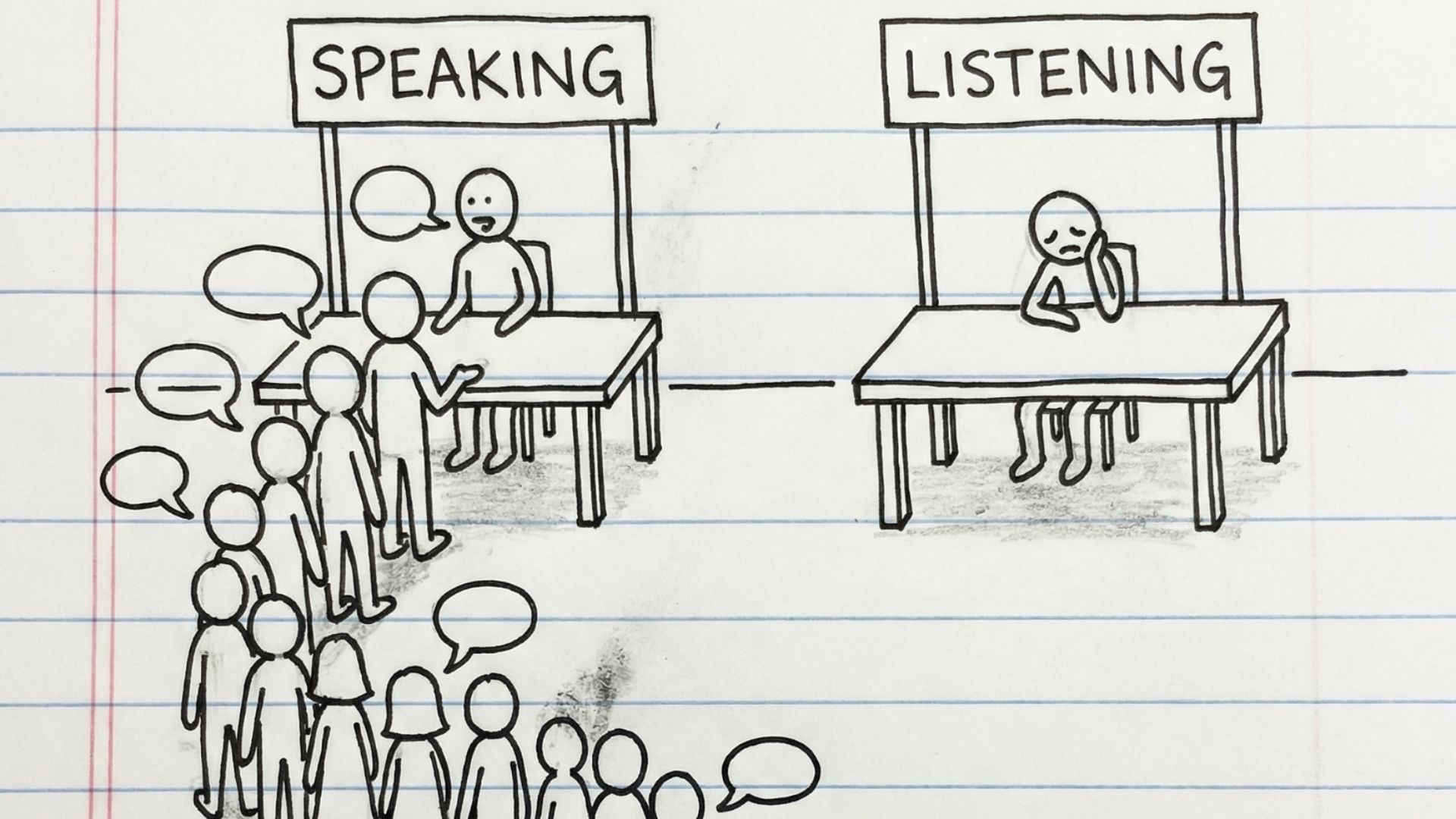
As a counselor one of the most important things we do is listen. In fact, I would argue that if we don’t listen well, we won’t speak well. On average my introductory session for biblical counseling usually lasts anywhere from 60 to 90 minutes, and I will spend roughly 75 percent of that just listening, sometimes more sometimes less but the average is right around that 75 percent mark. Now, I will say that the longer I meet with them the balance between listening and talking adjusts simply because I have a better understanding of their situation and therefore a better idea of what to say that would actually help their situation. Now, I would be lying if I didn’t admit that there are times I want to help so bad or I think I know the perfect answer that I stop listening and begin sharing the “answer to all their problems” all the while they sit across the room from me with a blank stare because nothing I am saying is helping or even addressing the situation they’re in which leads me to the big idea and that is we are living in a society that would rather speak than listen; and this is why we see politics, college campuses, work places and homes getting louder and louder while conversation and understanding slip away through the cracks our voices make as we compete in a shouting match with those around us.
I think the reason this particular subject is on my mind is because I have experienced what it feels like to be heard and unheard. I have witnessed first hand how a conversation can and will go when both parties feel like they not only have a space to have a voice but to also be genuinely heard. I’ve witnessed people storm out, leave conversations, remove themselves from group chats, cancel each other, lose friendships, quit speaking, abandon family and more all because neither party wanted to just sit and listen. See, I think we underestimate the power of listening and until we understand it the only thing we should expect is a world full of noise and yet not a single ear to hear it. So, maybe the American author Stephen Covey was right…
“People don’t listen to understand. They listen to reply. The collective monologue is everyone talking and no one listening.”
In my time studying the life of Jesus something has stood out to me; well honestly it has baffled me. It’s the fact that Jesus who was fully man yet fully God listened even though he already knew what the person was going to say. Jesus, knowing the situation better than even the person talking valued listening not because he was going to learn something new or anything but rather to help us understand something. That listening gives way to understanding which will lead to opportunities that will allow our words to have impact. Yes, Jesus’ words had impact simply because he was God but don’t be so quick to dismiss the power of a holy, omniscient God who listens. However, and this is important so don’t miss this, Jesus’ care for the other person fueled his desire to listen. And that is the difference between us and Jesus. He is selfless, we are selfish. He cares enough to sit amongst people who are dead wrong, contradictory and argumentative all because he cares. Yes, there were times he spoke up harshly but there were times he spoke gently and he was able to do so because he understood the other person. Now, I will admit that there is a very big difference between us and Jesus. He already knows so he already understands. He knew exactly where the woman at the well was which is why he was able to speak to her the way he did. We don’t have this ability. We have to listen to understand. We don’t know situations and stories. We don’t know the caverns of someone’s life so we must listen, we must distinguish when we need to be quiet and when to ask questions because it is not until we understand can our words have their full affect. No one ever told Jesus “that wasn’t what I needed to hear” but rather they stood there amazed when he spoke. We, or maybe its just me have been rebuked many times because I spoke prematurely, didn’t fully understand, stopped listening and said something that was not right all because I decided enough was enough and it was my turn to speak.
Now, don’t get me wrong. I am not saying that until you understand someone your words are empty; that would be foolish to think like that. Think about the counseling analogy we began with. I can offer genuine hope and encouragement to the person I just met simply because the gospel has that much power but when I begin to see more of their life and situation can my counsel become more specific and helpful but it all starts with listening.
I remember hearing someone say one time…
“We have two ears and one mouth so that we can listen twice as much as we speak”.
Now, at first glance that makes sense and we might even agree with it but if our lives are to be directed by someones voice it ought not be a greek philosopher who placed his faith in Zeus but rather Christ who is the one true God who is alive and is the only one who has true authority and power over a mans life. Not only did Jesus give us many examples of what it looks like to listen but he also gave instructions on how to engage with people written in the pages of scripture. James 1 gives us a challenge that is quite contrary to how the world interacts with each other. It says, “know this, my beloved brothers: let every person be quick to hear, slow to speak, slow to anger” (v.19). This is not a challenge that we have the option to partake in but rather a command. If we are to imitate Christ in our lives we must imitate the whole Christ in the whole of our lives and this includes how we interact with people. This includes your spouse and every kid you have running around your house. This includes your neighbor, both the one who is right next door and the average person you run into at the store. This includes the co-workers that constantly make your job harder and the boss that seems to overlook you no matter what you do. This includes conservatives, democrats and everyone in between of that ever growing canyon. This includes the man who can be seen standing on the corner with a sign that reads “homeless, please help” or “legalize abortion”.
Now, of course listening is not synonymous with condoning. Jesus certainly did not condone much of what he heard but nonetheless his listening had a few key ingredients that ultimately made his interactions fruitful. Let’s look at two of them briefly…
Patience:
Jesus was patient, there is no denying that. However, he wasn’t patient because he needed time to process or think about things; and he wasn’t patient because he was fighting off some sinful anger in his heart. He was patient for the sake of the person he was speaking with and that patience was driven by the love he had for them. Scripture doesn’t say exactly how long he waited at the well for the Samaritan woman but regardless of the duration, he still waited. He was patient as he was crucified. He stood silently as he took insults, accusations, and beatings and we can’t seem to read someone’s reply to our post on Facebook without having a melt down. He had patience with his disciples and their forgetful minds. He even had patience with the pharisees and the sadducees even though they made his life harder. He could be interrupted even though he was on the way somewhere (Mark 5:25-34) and he was all of this not just because he wanted to be nice but because he was patience personified.
Love:
The life and death of Jesus was marked by love. Every action he took, every word he spoke was saturated with love for those of whom he was interacting with. His words were edifying, encouraging, and gentle. He showed love by instead of summoning 12 legions of angels he hung there on the cross asking the Father to forgive them. He showed love to those who were hurting and suffering and spoke words that ultimately gave life. He dined with and sat with the tax collectors and the sinners and basically anyone else that others would condemn. Yes, he did have some harsh conversations with certain people like the religious leaders; calling someone a “brood of vipers” or “white washed tombs” are things you never want to be called yet Jesus being perfect in form never once called someone something or acted in a way that would go against who he was. He knew when his words would fall onto deaf ears and he knew when people were ready to listen. But a big difference between us and Jesus is that even his harsh words, anger, and discipline were done in a way to demonstrate his love not just because he loved people but because he was love personified.
Now What?
So, now what? What should we do with this information? Well, if you are reading this and can say that you have placed your faith in Christ then scripture says that our lives should be, over the course of our life be imitating Jesus’s life more and more; it’s called “sanctification”. However, all too often we put “limits” on the process of sanctification. We cone off sections of our heart and label them as “just fine” or “not that bad” which is a common manipulative strategy to make us feel better about ourselves, However, scripture calls it a refusal to surrender the heart; and that is where the issue lies, the heart. The sinful heart longs for one thing this side of heaven; more of self, less of others. Which, of course, is opposite of how scripture commands us to operate; more of Christ, less of me. (Jn 3:30)
Now, in an effort to not only look like but respond like Jesus we must remember that without the power of the Holy Spirit we will never be more than a self-exalting, pseudo-listening kind of people who speak wrongly and refuse to listen. It is only when we surrender our entire life to the Lord will our entire lives look like his. So, if you find yourself having to reply to every mean tweet, having a melt down at everyones negative comment, or if you can’t seem to have a conversation with someone of a different ideology without feeling the need to point out the infinite reasons they are wrong before you listen to why they believe what they believe then maybe the problem isn’t with them but you just haven’t surrendered that part of your life yet. Because like we saw earlier, more often than not Jesus’s first words to people were questions not “how stupid are you?!” and he definitely didn’t respond to every critic even though they were dead wrong. The good news (and there is always good news) is that through the Holy Spirit we can interact and respond to those around us just like Jesus did but it comes at a price and that prices is a fully surrendered heart. So don’t be surprised when you withhold portions of your heart from the Lord that only a portion of your life looks like His.
So, in a world full of people lining up to talk be like Jesus and listen. Your time to speak will come and when it does make sure you have something worth while to say but until then take a seat and listen because you have no idea what the impact will be.
Leave a Reply